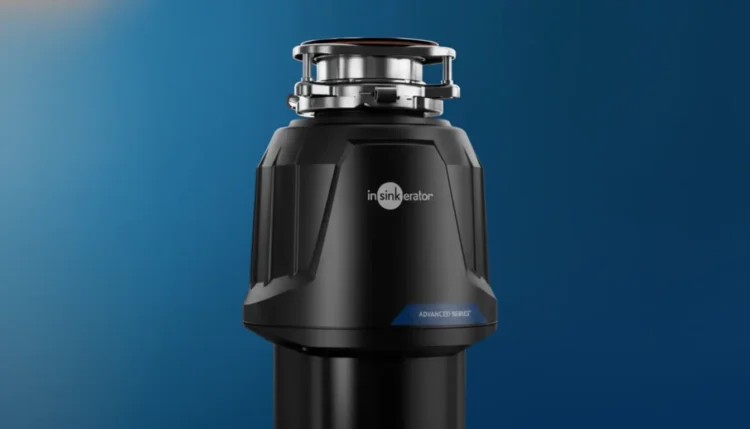

Open kitchens need garbage disposals with quiet motors to avoid disrupting conversations and activities. We reviewed top models designed for quieter operation in such spaces.
Our Top 5 Picks



How to Choose the Right Garbage Disposal
The most common mistake when buying a garbage disposal is focusing only on horsepower. HP matters, but so does motor type, grind chamber material, mounting system, and whether a power cord is included. Getting these details right before ordering saves a return trip.
- Match HP to your cooking volume. A 1/2 HP disposal handles everyday scraps for a household of two to three people without issue. If you cook regularly, process fibrous or tougher food waste, or have a larger household, a 3/4 HP unit gives you the torque to keep up without jamming as often.
- Understand motor type. Induction motors (used in the InSinkErator Badger and Evolution lines) run quieter and tend to last longer due to fewer moving parts. Permanent magnet motors (used in Waste King and Moen Vortex units) spin at higher RPMs and are generally more effective at reducing jams through speed rather than torque. Both are reliable — the difference shows up most in how they handle tougher scraps.
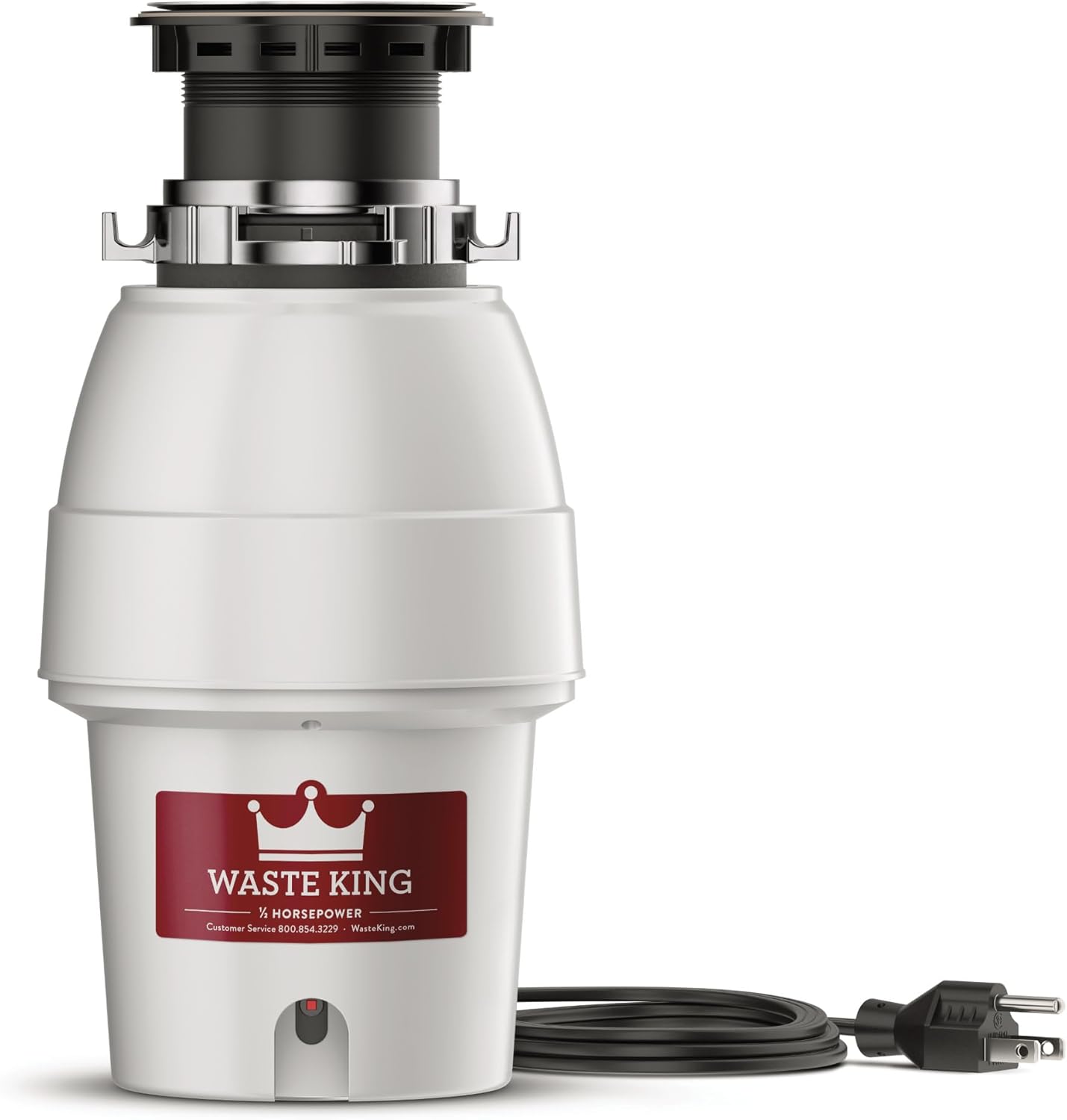
- Check whether a power cord is included. This is a frequent source of frustration. The Badger 5, Badger 5XP, and Evolution 0.75HP ship without a cord and require hardwiring or a separately purchased cord. The Waste King L-2600 and Moen GXS75C include a pre-installed cord. If you have a standard outlet under your sink, cord-included models are simpler to install.
- Consider the grind chamber material. Galvanized steel chambers are standard on entry-level units and hold up well for most households. Glass-filled nylon chambers, found on the Waste King L-2600, are corrosion-proof by design and better suited for high-moisture, high-acid environments over the long term.
- Factor in noise if your kitchen is open. Standard Series units run louder. If your kitchen opens to a living area or dining space, Advanced Series models with SoundSeal (InSinkErator) or SoundSHIELD (Moen) insulation are worth the price difference. An enclosed base cabinet also dampens noise significantly regardless of the model.
- Know your mount system before buying. InSinkErator uses Lift and Latch, Waste King uses EZ Mount, and Moen uses Universal XPRESS Mount. Replacing a disposal with the same brand is usually a direct swap. Switching brands may require a new mounting assembly.
What Garbage Disposals Cannot Handle
A disposal is not a replacement for a trash can. Putting the wrong items down will cause jams, clogs, or premature wear regardless of how powerful the motor is.
- Large bones and shells. Small soft bones from fish or chicken wings are generally fine in 3/4 HP units. Large bones, oyster shells, and clam shells should go in the trash — they will damage grinding components over time.
- Fibrous vegetables. Celery, artichoke leaves, corn husks, and asparagus ends can wrap around the grinding plate and cause jams. Cut them into small pieces or compost them instead.
- Pasta, rice, and starchy foods. These expand with water and can build up in the drain line, causing slow drains or blockages downstream from the disposal.
- Grease and cooking oil. Liquid grease solidifies as it cools and coats the inside of drain pipes over time. Run hot water and dish soap through the disposal after any greasy load, and avoid pouring cooking fat directly into the sink.
- Pits and hard seeds. Cherry pits, avocado pits, and peach pits are too hard for most residential disposals. Small fruit seeds are generally fine.
- Coffee grounds in large quantities. Small amounts are not harmful to the disposal itself, but grounds accumulate in drain traps and can contribute to clogs. Compost them instead.
Things to Consider Before You Buy
A few practical details that are easy to overlook until you are standing under your sink with the disposal in your hands.
- Under-sink clearance. Measure vertical space before ordering. The Evolution 0.75HP and Moen GXS75C are taller than the Badger models. If you have a low cabinet floor or existing plumbing that reduces clearance, compact dimensions matter.
- First-time install vs replacement. Replacing an existing disposal of the same brand is generally straightforward — the mounting ring stays in place and the new unit clicks in. A first-time install requires more steps, including cutting a drain opening if one does not exist. Moen’s Universal XPRESS Mount is the most brand-agnostic option for cross-brand replacements.
- Dishwasher drain connection. Most disposals include a knockout plug in the dishwasher inlet. If you connect a dishwasher drain line, remove the plug first. The InSinkErator Evolution includes an EZ Removable Dishwasher Inlet Plug specifically for this step.
- Septic compatibility. All five models in this list are confirmed septic-safe for properly sized and maintained systems. No special septic-rated disposal is required for a standard residential septic setup.
- Reset button location. Every disposal has a manual reset button that trips during a jam or overload. On most models it sits on the bottom of the unit. Confirm you can reach it from under your sink before installation — tight cabinet configurations can make it awkward to access.
- Warranty coverage and service. The Waste King L-2600 carries a 5-year warranty and the Moen GXS75C a 10-year in-home warranty — both well above the 1-year coverage on standard models. If you are buying for a household that runs the disposal daily, the warranty tier is worth factoring into the price comparison.
Why You Should Trust Us
We are not appliance engineers or licensed plumbers. What we do is analyze real buyer feedback across a large volume of verified reviews, compare published specifications, and cross-reference product details to surface what consistently matters to people who have actually installed and used these disposals over months.
Every model in this list was selected based on rating consistency, review volume, and the patterns that emerge from long-term ownership feedback — not first-impression unboxing reactions. We have no brand preference and earn no incentive to favor one unit over another.
Final Thoughts
For most households replacing an existing disposal, the choice comes down to three practical questions: what HP you need, whether you want a cord included, and how much noise tolerance you have. The Badger 5 and Badger 5XP are reliable hardwire options from the most widely installed brand in the US — straightforward replacements at a Standard Series price. The Waste King L-2600 offers a meaningful grind speed upgrade with a cord included and a 5-year warranty at a competitive price. If noise reduction is the priority, the Evolution 0.75HP and Moen GXS75C both add dedicated insulation technology alongside 3/4 HP performance, with the GXS75C carrying the strongest warranty of the group at 10 years.
FAQs
Do I need a plumber to install a garbage disposal?
Not necessarily. Replacing an existing disposal of the same brand is a DIY-friendly task that most homeowners complete in under an hour with basic tools. A first-time install that requires new drain plumbing is more involved and may be worth hiring a plumber for if you are not comfortable with under-sink work.
What is the difference between the Badger 5 and Badger 5XP?
The Badger 5 runs a 1/2 HP motor. The Badger 5XP uses the same mounting system and footprint but upgrades to a 3/4 HP motor for more torque and faster grinding. Neither includes a power cord. The 5XP is the better choice for households that cook frequently or process tougher scraps regularly.
What is the difference between an induction motor and a permanent magnet motor?
Induction motors run at lower RPMs with higher torque and tend to operate more quietly. Permanent magnet motors spin faster — the Waste King L-2600 runs at 2,600 RPM and the Moen GXS75C at 2,800 RPM — which helps push food waste through before it has a chance to wrap around the grinding plate. Both motor types are reliable for residential use; the difference becomes more noticeable with fibrous or stringy food waste.
When should I use the reset button?
The reset button trips automatically when the motor overloads — usually from a jam or running the disposal dry for too long. If the disposal hums but does not grind, turn it off, wait 10 minutes, use the hex wrench socket on the bottom to manually free the jam if needed, then press the reset button before switching it back on.
Can a garbage disposal be used with a septic system?
Yes, all five models in this list are septic-safe for properly maintained and sized systems. The additional food waste does increase the load on a septic tank over time, so more frequent pumping may be needed — typically every 3 to 5 years depending on household usage.
Why does my garbage disposal smell, and how do I fix it?
Odors usually come from food residue built up under the splash guard or on the grinding plate. Run cold water and a few ice cubes through the disposal to clean the grinding components. For the splash guard, scrub the underside with a brush and dish soap. Citrus peels run through the disposal can help with lingering odors. Persistent smell after cleaning may indicate buildup deeper in the drain line.
Is it normal for a new disposal to be loud?
Some noise during grinding is normal and expected. Brand-new units can sound louder initially as components settle in. If the noise is a grinding or rattling sound rather than the normal motor hum, check whether a foreign object has fallen into the chamber — silverware and small bottle caps are the most common culprits.